OutSystems: Streamlining Mobile App Development
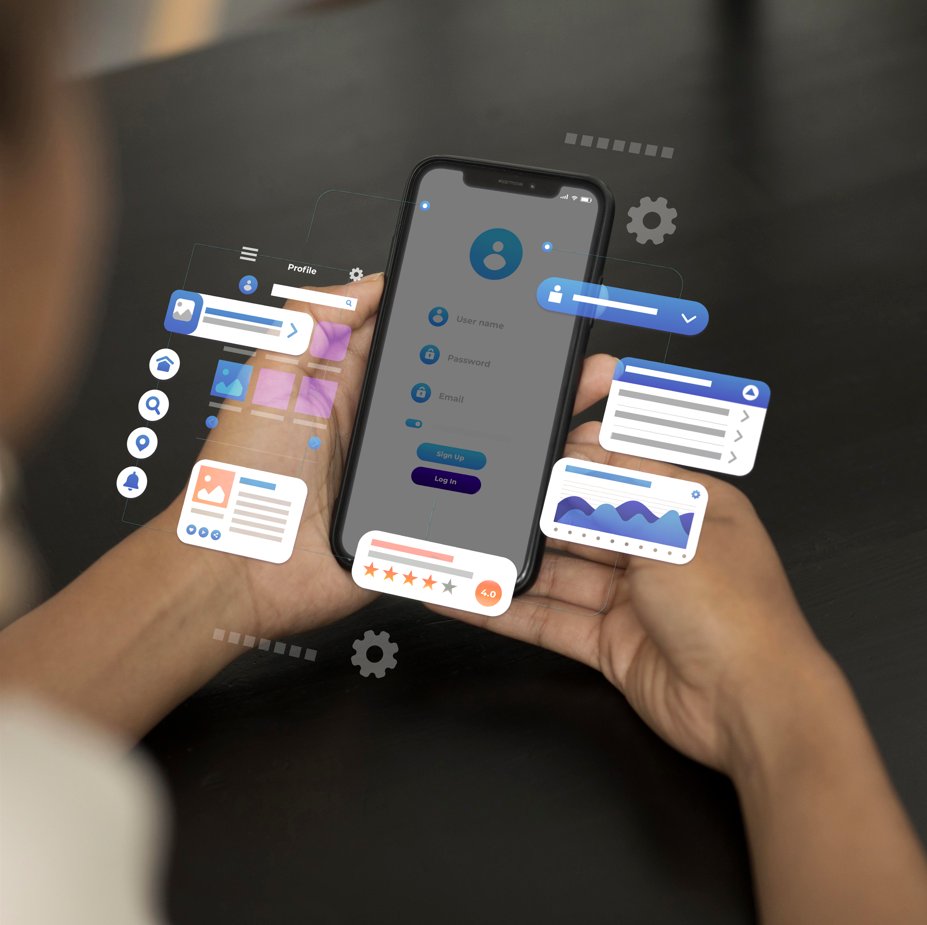
OutSystems: Streamlining Mobile App Development for Professionals


In today’s digital era, mobile apps are vital for businesses to engage customers, optimize workflows, and stay competitive. However, traditional app development is often slow, costly, and complicated by the need to support both iOS and Android. OutSystems, a leading low-code platform, addresses these challenges with its rapid development and cross-platform capabilities, making it a game-changer for professionals. This blog explores how OutSystems accelerates mobile app development and supports iOS and Android with a single codebase, empowering workplace efficiency.

OutSystems: Low-Code Powerhouse
OutSystems, a Portugal-based low-code platform since 2001, serves global enterprises across industries like finance and manufacturing. Its visual development environment lets developers build apps using drag-and-drop tools for logic, data, and interfaces, reducing technical barriers and enabling non-coders, like business analysts, to contribute. For mobile apps, OutSystems delivers native support, integrating seamlessly with device features like cameras and GPS.

Speed: From Vision to Victory
Time is critical in the workplace, and OutSystems excels in accelerating app development. Traditional methods may take months, but OutSystems can cut this to weeks or even days. Its visual interface and pre-built modules eliminate repetitive coding, minimizing errors and debugging. Developers can quickly integrate backend systems or third-party services like Salesforce, with AI tools suggesting best practices. Teams using OutSystems report up to 10x faster development, enabling professionals to launch MVPs swiftly and save 30-50% in costs.

Cross-Platform: One Codebase, Dual Impact
OutSystems’ ability to support iOS and Android with a single codebase is a major advantage. Traditional development requires separate Swift and Kotlin codebases, doubling effort. OutSystems allows developers to create one app that compiles into native iOS and Android versions, with updates deployed simultaneously to both platforms. It leverages native features like iOS’s Core ML or Android’s Material Design, ensuring consistent, high-quality experiences. This can reduce cross-platform development time by up to 70%, helping professionals reach diverse users efficiently.

Beyond Speed: Security and Scalability
OutSystems ensures enterprise-grade security with OWASP-compliant features like encryption, meeting GDPR and HIPAA standards. It scales effortlessly from prototypes to high-traffic apps via cloud platforms like AWS. Integration with ERP, CRM, or AI tools further enhances its versatility.

Real-World Success
A financial firm built a mobile banking app in eight weeks using OutSystems, saving 40% in costs while serving both platforms. A manufacturer’s asset-tracking app cut time-to-market by 30%. These cases show OutSystems’ value for professionals.

Conclusion
OutSystems empowers professionals with fast, cross-platform mobile app development, reducing costs and complexity. Try it to unlock your team’s potential and lead in a mobile-first world.

More Updates

Further reading

Will AI Really Replace Entire Industries

The statement "Certain industries will be replaced by AI" is only half true. While AI will indeed replace a significant amount of "work content," it is rare for an entire industry to vanish across the board. Instead, industries are undergoing internal division of labor, restructuring, and upgrading. Replacing Functions, Not All Roles Multiple economic studies indicate that AI will impact approximately 40% to 60% of jobs. In these cases, some processes will be automated, while others will see productivity boosted by AI. Highly repetitive tasks—such as data entry, basic customer service, and routine report writing—are easily taken over by AI. However, the same industry will simultaneously create new roles focused on supervising AI, designing processes, and integrating systems. The Risk is Real, But It’s Not Doomsday Analysts estimate that AI and automation may "expose" hundreds of millions of jobs to replacement risks, particularly in white-collar administration, customer service, and certain areas of programming. At the same time, research from the World Economic Forum and major banks predicts that AI-related transformations will create new job categories. These include machine learning engineers, AI safety and ethics experts, and digital transformation consultants. Why Humans Retain the Advantage Currently, AI excels at standardized, predictable, and data-driven tasks. For work requiring empathy, complex communication, cross-domain judgment, and creative strategy, AI remains a tool for assistance rather than a total replacement. Many studies emphasize that "Human-Machine Collaboration" will become the mainstream model: Humans set the direction, make decisions, and bear responsibility, while AI handles calculation, generation, and analysis. How to Respond: Don't Fear Replacement, Learn to Utilize It The group facing the highest career risk is often not "people affected by AI," but "people who don't know how to use AI." Within the same job function, individuals who master AI tools will possess significantly higher productivity and competitiveness than their peers. Practical actions include: Learning to deconstruct work into automatable and non-automatable components. Mastering at least one AI tool (e.g., Generative AI, RPA, Data Analysis). Strengthening "non-programmable" capabilities, such as communication and problem definition. Personal Perspective: Reframe "Displaced" as "Restructured" Instead of asking, "Will Industry X be replaced by AI?" you should ask: "Which part of this industry's value chain is most susceptible to automation, and can I position myself on the side that designs and controls these systems?" Thinking this way offers far more actionable value than abstractly worrying about being "replaced."

Speed Without the Sprawl

Leveraging OutSystems' rapid development strengths, our team achieves true Agile development, focusing intensely on user requirements. However, requirements are never fixed; they take time to refine within the project's cycle. If a developer simply builds projects based on the initial requirements, it leads to significant rework when those requirements are inevitably revised. This creates serious technical debt that can derail a project's schedule. To combat this, we strictly follow the OutSystems Canvas Design architecture to define each module's usage and content. We generalize logic into foundational modules, optimizing reusability and providing high adaptability when requirements change. This approach allows us to eliminate complicated dependencies—avoiding the deployment nightmares that plague monolithic systems. The Real-World Challenge: "The Spaghetti Monolith" We’ve all seen it. A project starts fast. The "Idea-to-App" time is record-breaking. But as sprints pass and requirements evolve, the "interest rate" on technical debt spikes. Suddenly, changing a simple UI element breaks a core business process because the logic was trapped inside the screen. Deployment becomes a "big bang" event where everything must go live at once because of circular dependencies. In our team, we don't just "code fast"; we architect for resilience. Our Solution: The 4 Layer Canvas Strategy We treat the 4 Layer Canvas not just as a suggestion, but as our structural imperative. Here is how we use it to handle volatile requirements:  Isolating Volatility (End-User Layer): We keep our User Interfaces (UI) and interaction logic in the End-User Layer. This layer is highly volatile—it changes constantly based on user feedback. By isolating it, we can redesign a "Customer Portal" without risking regressions in our core business rules.Stabilizing Business Logic (Core Layer): We abstract our entities and business rules into the Core Layer. This is the backbone of our factory. Whether the data is accessed by a Mobile App, a Web Portal, or a Timer, the validation rules remain consistent. This promotes the "Don't Repeat Yourself" (DRY) principle.Enabling Independent Deployments: By using Service Actions (Weak Dependencies) in our Core layer, we decouple our modules. This allows different squads to deploy changes independently without forcing a factory-wide refresh—a critical enabler for our CI/CD pipelines.The Governor: AI-Driven Architecture How do we ensure we stick to these rules when moving at Agile speeds? We don't just rely on manual code reviews; we use the AI Mentor System. This tool acts as our automated architect. It scans our entire factory to detect architectural violations that humans might miss, such as: Upward References: Preventing foundational libraries from depending on business logic.Side References: Ensuring our End-User apps don't tightly couple with one another.Circular Dependencies: Identifying the "deadly embrace" between modules that locks deployments.The AI Mentor System quantifies this debt, allowing us to pay it down proactively before it hinders our release velocity. Join a Team That Values Architecture In our Taiwan office, we believe that low-code doesn't mean "low-architecture." We are building resilient, composable enterprise ecosystems that can scale. If you are a developer who cares about structural integrity, clean code, and mastering the art of OutSystems architecture, we want to hear from you.