𝗟𝗮𝘁𝗲𝘀𝘁 𝗔𝗹𝗲𝗿𝘁: 𝗡𝗲𝘄 𝗭𝗼𝗵𝗼 𝗣𝗵𝗶𝘀𝗵𝗶𝗻𝗴 𝗖𝗮𝗺𝗽𝗮𝗶𝗴𝗻
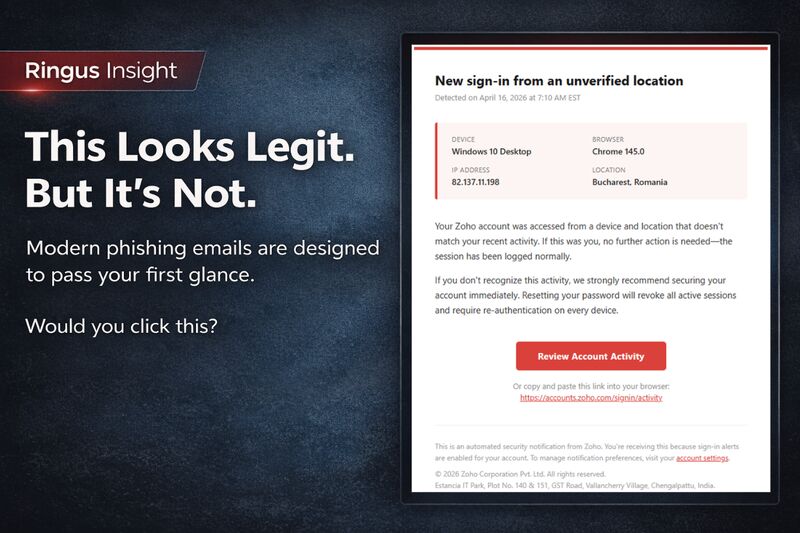
The email appears convincing at first glance, using login details such as device type, browser version, IP address, and overseas location to create urgency.
A recent advisory from a government cybersecurity agency highlighted the same Zoho impersonation campaign, while similar phishing patterns continue to be reported across official anti-scam and cybersecurity channels internationally.
𝗔 𝗳𝗲𝘄 𝗿𝗲𝗱 𝗳𝗹𝗮𝗴𝘀 🚩 𝘄𝗼𝗿𝘁𝗵 𝗰𝗵𝗲𝗰𝗸𝗶𝗻𝗴:
• Sender domain does not match the official brand domain
• Embedded link directs to a recently registered fake domain (e.g. new-loginzoho[.]com, Created at 4/16/2026)
• Urgency created through suspicious foreign sign-in details
• Embedded button prompting immediate account action
• Professional formatting does not always mean legitimacy
Phishing attacks are no longer easy to spot — many are designed to pass a quick visual check.
Phishing emails continue to evolve, and many now look polished enough to pass an initial visual check.
Sometimes taking an 𝗲𝘅𝘁𝗿𝗮 𝟭𝟬 𝘀𝗲𝗰𝗼𝗻𝗱𝘀 before clicking makes all the difference.
Further reading